
Fisher- Our site also contained plenty of habitat to suggest the possibility of fishers, however they tend to like some riparian habitat and there was none within our plot. Our site contained a high amount of heavy forest cover with plenty of dead fallen wood to forage in and plenty of small animals to hunt.While we saw no evidence of their favorite prey, porcupines, there are plenty of dead trees for female fishers to make their den within.

Pileated Woodpecker- Unlike the other two species we actually saw direct physical evidence of the presence of Pileated Woodpeckers. Our sit contained many, many dead standing snags. Nearly all of the large snags we recorded had large excavations in their sides indicating Pileated Woodpeckers were foraging there. We did not see nest sites within our plot, but the large holes we found indicated that at the very least these unique birds came to our site to feed on their insect prey.

Brown Snake- These small reptiles are found commonly throughout the northeast. They feed on insects and live in areas with ground cover like brush or dead leaves, which were prevalent on our site. While these snakes can tolerate more urban conditions than most they do not live in high altitudes. Next time your in Niquette Bay watch your feet you just may see one of these snakes.

Scarlet Tanager- This is a vibrantly colored but rarely seen due to the fact that it largely keeps to the canopy. If you spot this bird it will only be in the summer, it spends winters in Montane Evergreen forests. It is likely found in our site but you would be lucky to spot this beautiful bird.

Porcupine- This strange solitary creature is found throughout most of North America in wooded and shrubby areas. It is a rare occurrence to see them however their habitat does fit with many of the natural communities found within our site. They like to make their den in caves, decaying logs, or dead trees, all of which we documented within our plot. If there were porcupines in our plot, the fisher cat would likely not be far behind.
White-tailed Deer- This species and its many sub-species has spread throughout North America and into Central and South America. It can adapt to nearly environment from woodlands to swamps. As they graze they move through a lot of territory. Considering the overpopulation problem we are suffering from I would be highly surprised if there weren't deer spotted within our site.

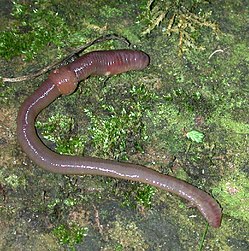
European Earthworm- This introduced species has voraciously spread throughout North American forests. It would thrive in the woodland habitat of our site, because it relies upon dead organic material above the soil for food. The large amounts of leaf litter would be perfect for it. When we dug our soil pit we saw this species.

No comments:
Post a Comment